


Introduction
In freight forwarding, everyone talks about pricing, relationships, and service quality.
But almost nobody talks about the real place where deals are won or lost:
The inbox.
Every shipment starts with an email.
Every RFQ, follow-up, delay update, or clarification lives there.
And yet, most freight companies treat email like a basic tool — not a critical system.
That’s where things start breaking.

The invisible problem no one notices
Here’s what a typical day looks like inside a freight company:
- 120+ emails received
- Multiple RFQs across different customers
- Internal coordination between sales and operations
- Constant follow-ups
Now ask yourself:
How many of these emails are actually tracked properly?
The answer is uncomfortable.
Most teams rely on memory, manual tracking, or “someone will handle it.”
That’s not a system. That’s a risk.
Where deals actually get lost
1. Missed RFQs
An RFQ comes in.
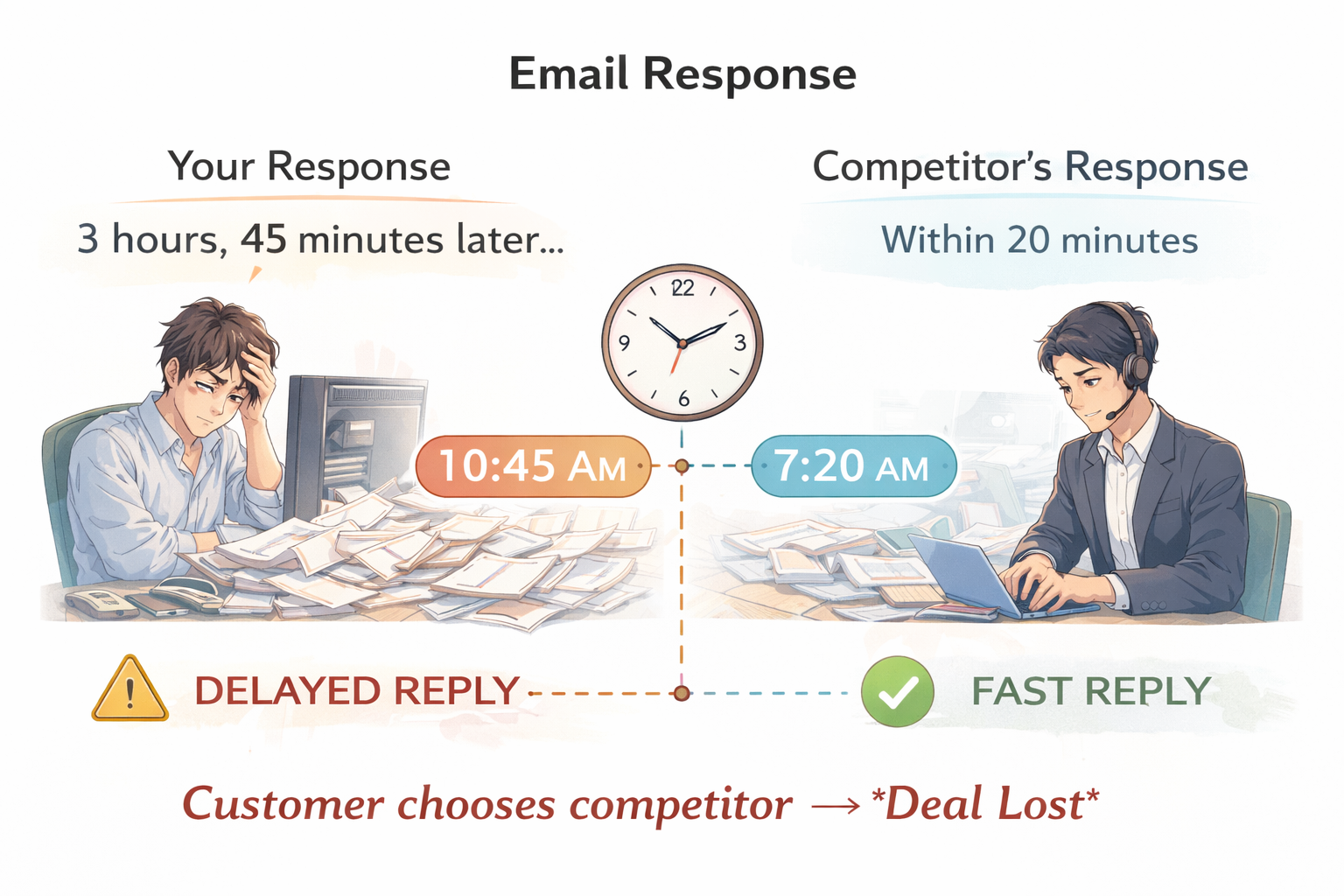
It sits unread for 3–4 hours.
By the time someone replies, the customer has already moved on.
In logistics, speed is not an advantage.
It’s the baseline.
2. Delayed follow-ups
Customer: “Any update?”
No response for 6 hours.
Even if your pricing is good, the perception is clear:
👉 “These guys are slow.”
And in freight, slow = unreliable.
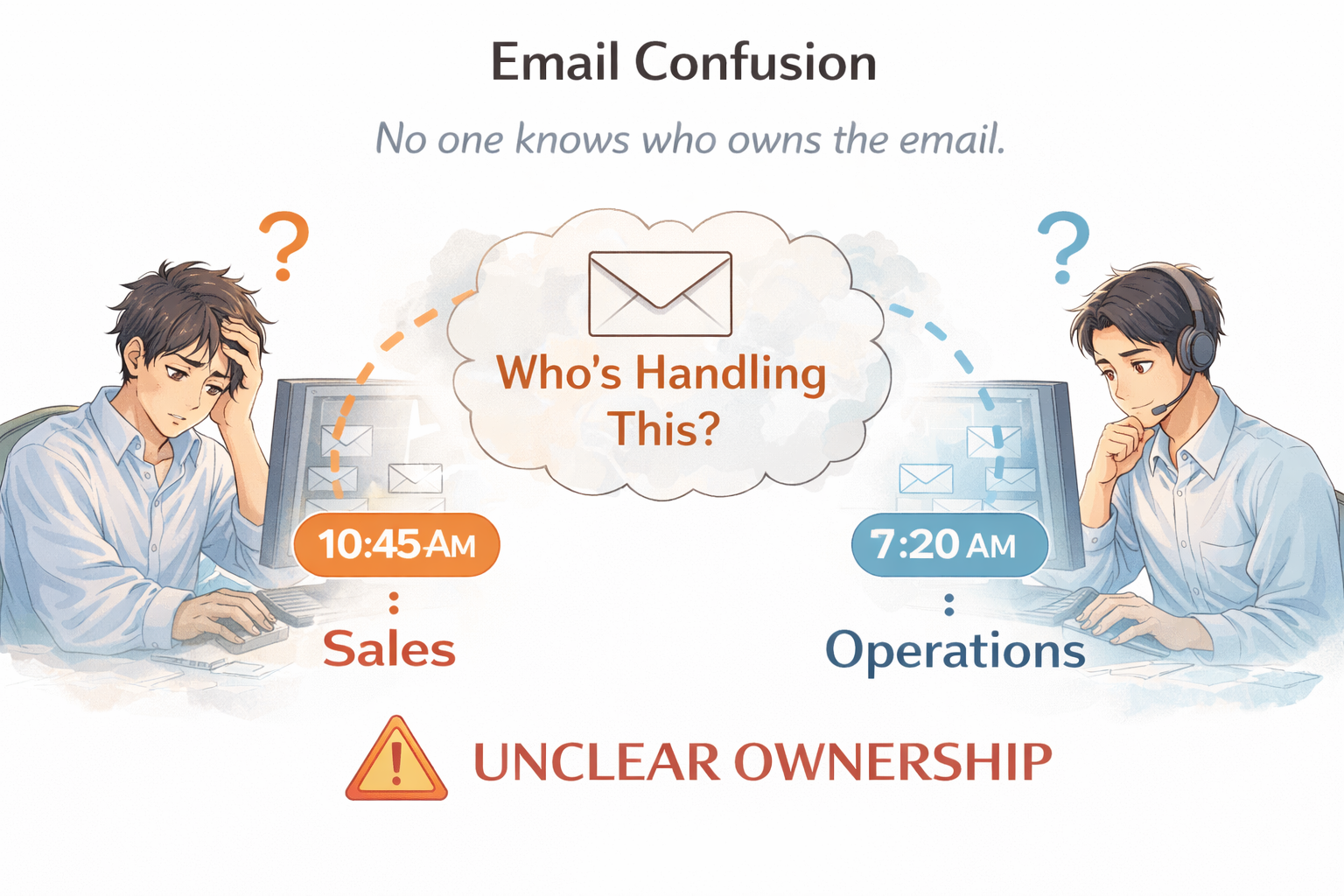
3. Internal confusion
Sales thinks operations replied.
Operations thinks sales handled it.
No one owns the email.
This is one of the biggest silent killers of deals.
4. No visibility
Managers don’t know:
- Which emails are pending
- Which customers are waiting
- Which deals are at risk
So problems are only noticed after the deal is lost.
The real cost of poor email management
Most companies underestimate this.
Let’s break it down:
- Lost RFQs = lost revenue
- Delayed replies = lower conversion rate
- Poor coordination = bad customer experience
Even missing 2–3 deals a week compounds massively over a year.
What high-performing freight Teams do differently
They don’t rely on inboxes.
They build email workflows.
That means:
- Emails are categorized automatically
- Ownership is clear
- Follow-ups are tracked
- Nothing gets lost
Instead of reacting to emails, they manage them proactively.

The shift: from inbox to system
Think of this:
Your CRM tracks deals.
Your accounting tracks money.
But what tracks your emails?
If your answer is “Gmail inbox,” that’s the gap.
And that gap is where deals disappear.
Final thought
You don’t lose deals because you’re not capable.
You lose them because your system doesn’t support your team.
Fix the system, and everything changes:
- Faster responses
- Better coordination
- Higher trust
- More closed deals
And it all starts with how you handle your inbox.
