


When something goes wrong in freight forwarding, we usually blame the port.
Congestion.
Customs delay.
Documentation issue.
Carrier rollover.
But in many cases, the real delay started much earlier.
Inside the inbox.
The 6-hour silence that costs a client
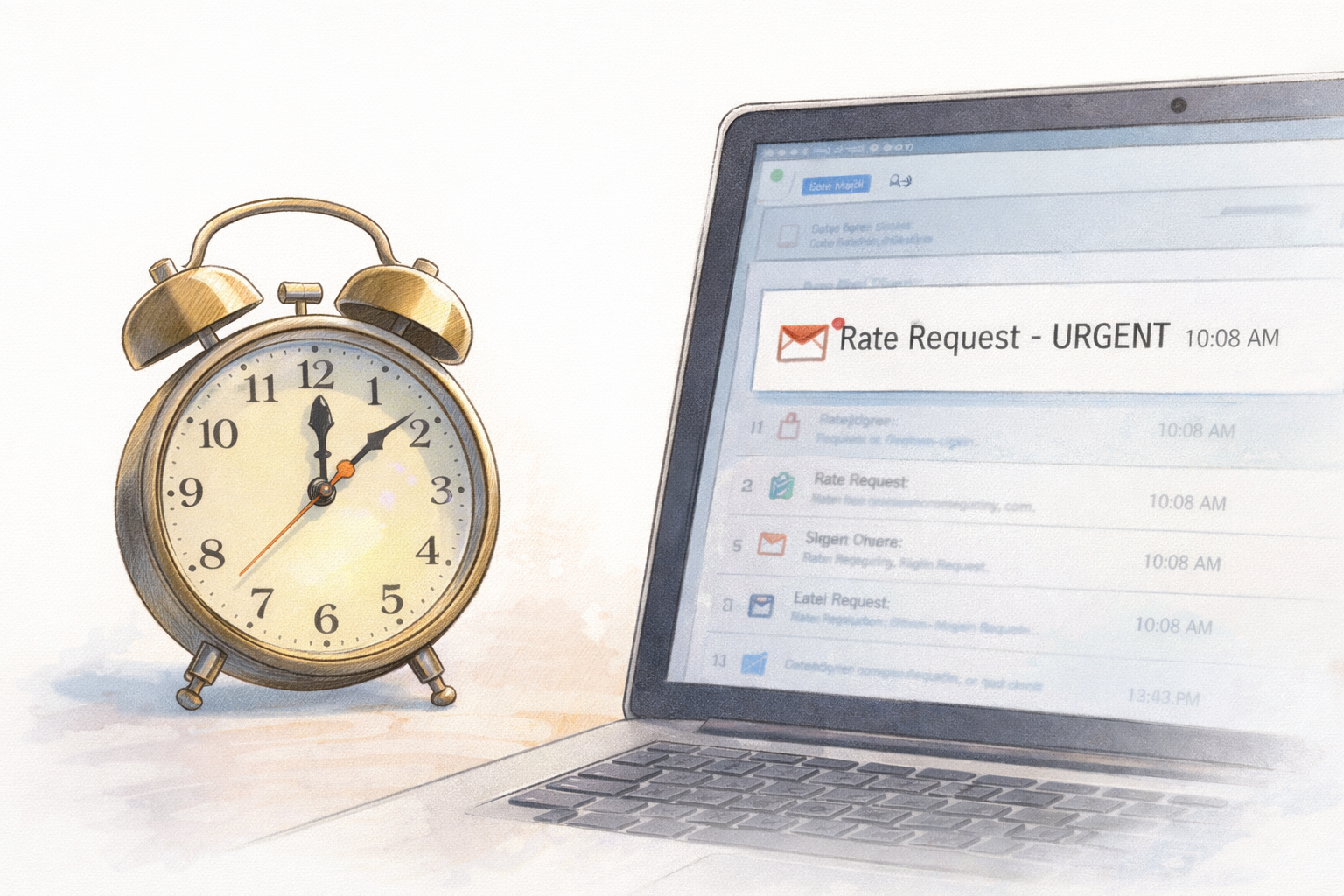
Let’s say a client sends a rate request at 10:12 AM.
Your team is busy.
Emails are coming in nonstop.
The subject line doesn’t scream urgency.
It gets buried.
You reply at 4:45 PM.
By then, the client has already moved to another forwarder.
No one tells you.
No one argues.
No one escalates.
You just lost a shipment quietly.
And you don’t even know it.
Freight runs on perception
In freight, speed is perception.
Clients rarely see your backend work.
They don’t see documentation checks.
They don’t see coordination calls.
They don’t see follow-ups with carriers.
They only see one thing:
How fast did you respond?
Even if the shipment takes 7 days to move,
a 10-minute response builds confidence.
A 5-hour silence builds doubt.
The real inbox problems freight teams face
If you’re running operations in Chennai or anywhere in India, this will sound familiar:
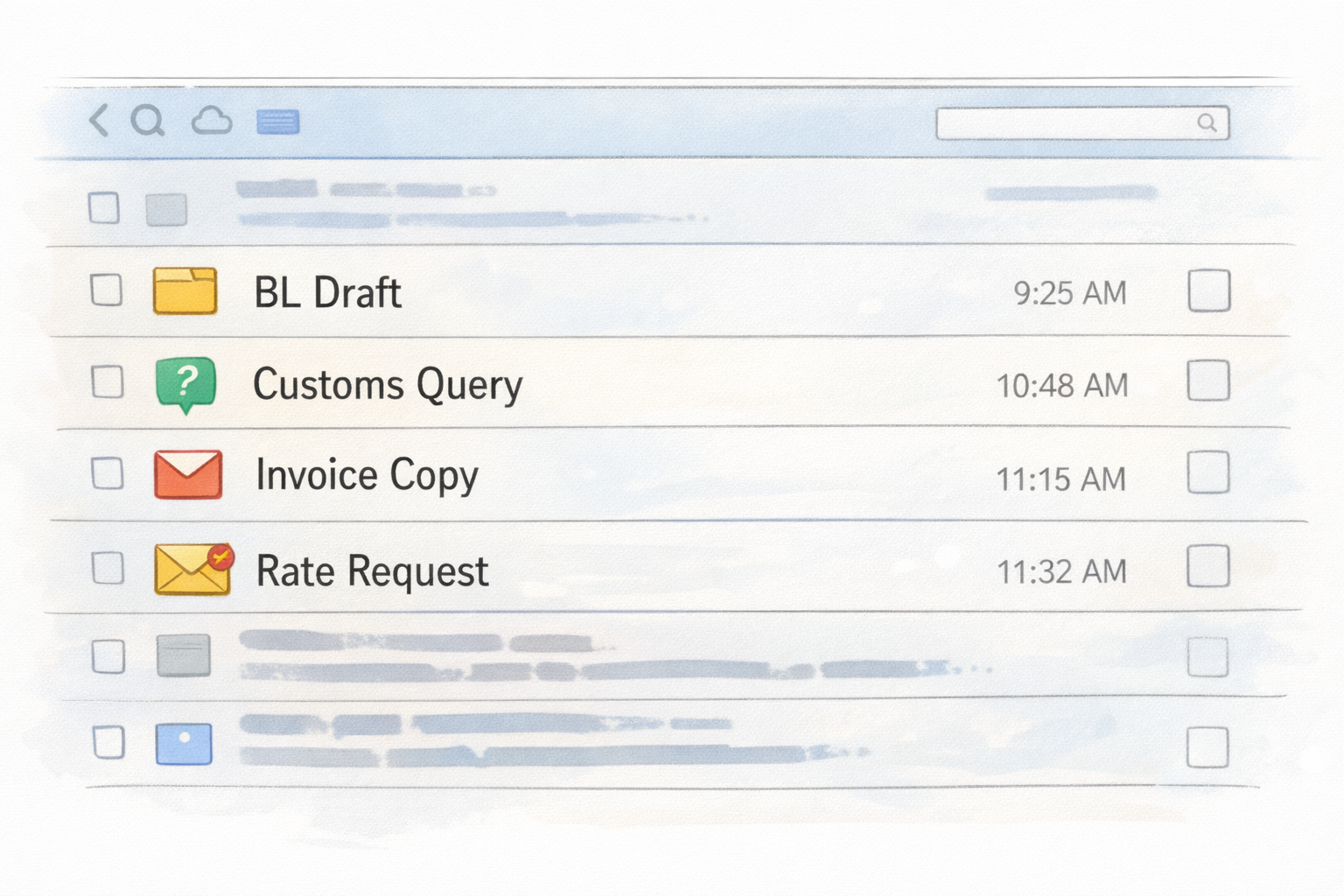
- 200+ emails per day
- Rate requests mixed with newsletters
- BL drafts mixed with promotional mail
- Customs clarifications buried in long threads
- Invoice copy requests coming after delivery
- No clear ownership of who replies
Most freight companies don’t have an “email system.”
They have email accounts.
And that difference matters.
When emails become operational risks
A delayed email doesn’t just affect communication.
It affects:
- Shipment release timing
- Customs documentation
- Client confidence
- Payment cycle
- Repeat business
One missed customs clarification can delay clearance.
One missed invoice request can delay payment.
One missed rate query can cost recurring volume.
These are not IT problems.
They are operational leakages.
The hidden cost no one measures
You can calculate:
- Port demurrage
- Detention charges
- Trucking cost
- Duty amount
But how do you calculate:
- A lost client due to slow response?
- A damaged reputation because of silence?
- A customer who never called back?
That cost never appears in your P&L.
But it shows up in your growth.
What high-performing freight Teams do differently
They treat the inbox as part of operations.
Not as personal communication.
They ensure:
- Every shipment email has clear ownership
- Rate requests are visible instantly
- Pending emails are tracked
- Follow-ups are not dependent on memory
- Nothing sits unseen for hours
Because in freight, response time equals service quality.
The simple question every freight founder should ask
If I walk into my office right now and ask:
“Which emails are pending client replies?”
Can my team answer immediately?
Or do they start scrolling?
That answer tells you everything about your operational maturity.
Freight doesn’t need more emails
It needs more visibility.
Speed doesn’t come from typing faster.
It comes from clarity:
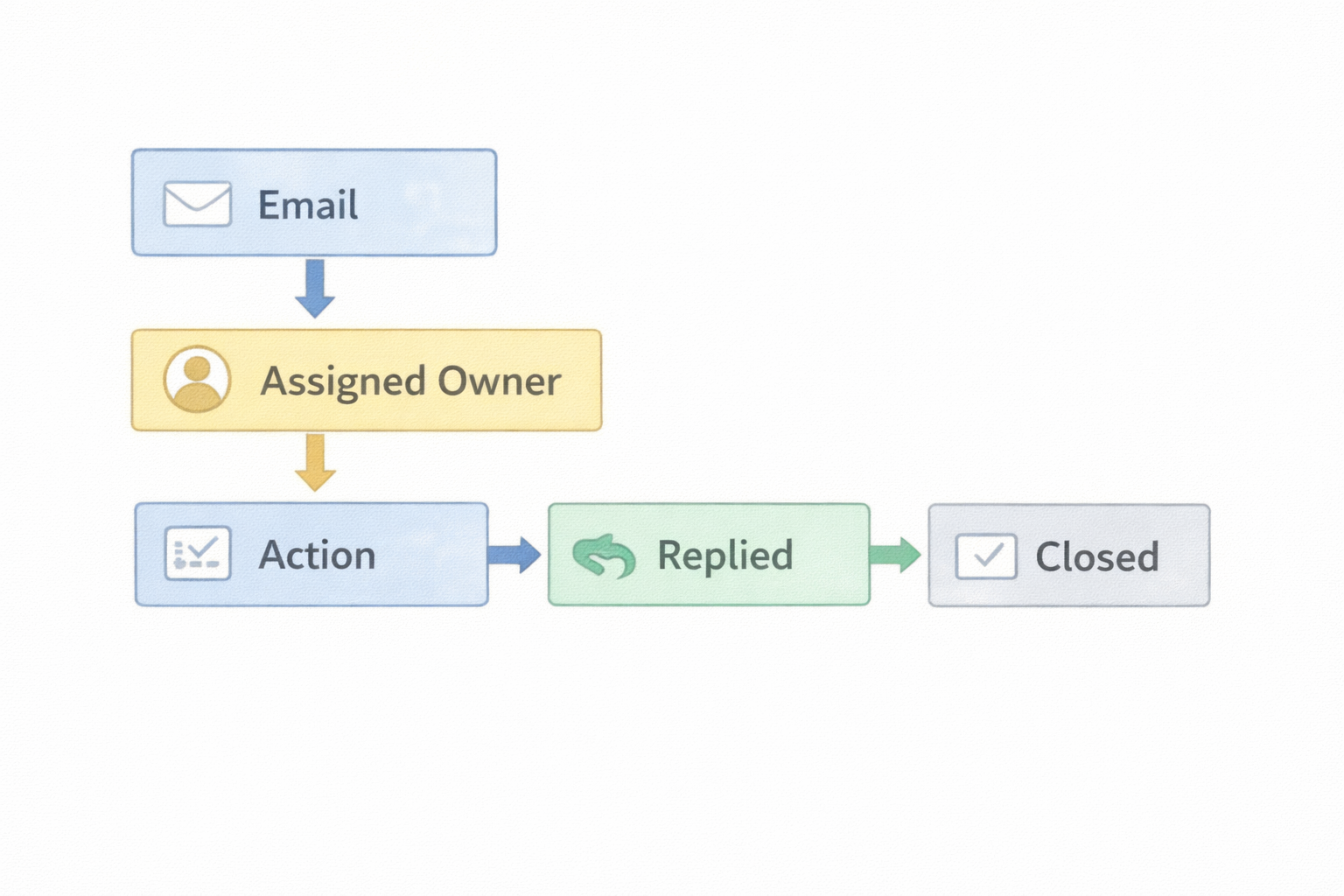
- Who owns it?
- Has it been replied?
- Is it still pending?
- Is it critical?
When you solve that, response time improves automatically.
And when response time improves,
client trust improves.
And when trust improves,
volume follows.
In freight, silence is expensive.
And sometimes the most expensive mistake
never leaves the inbox.
