


In freight forwarding, email is not just communication — it is operations.
Every shipment confirmation, document correction, rate approval, customs clarification, and customer update passes through the inbox first.
So when someone says, “I’ll just check my email quickly,” it sounds harmless.
But across a freight organization, those small checks quietly become one of the biggest productivity leaks.
Email is the real operations dashboard
Unlike many industries, freight teams don’t operate from a single system.
Work flows through conversations:
- customers requesting updates
- overseas agents sharing documents
- transporters confirming schedules
- customs brokers asking clarifications
The inbox becomes the control tower.
The problem? It was never designed to manage operations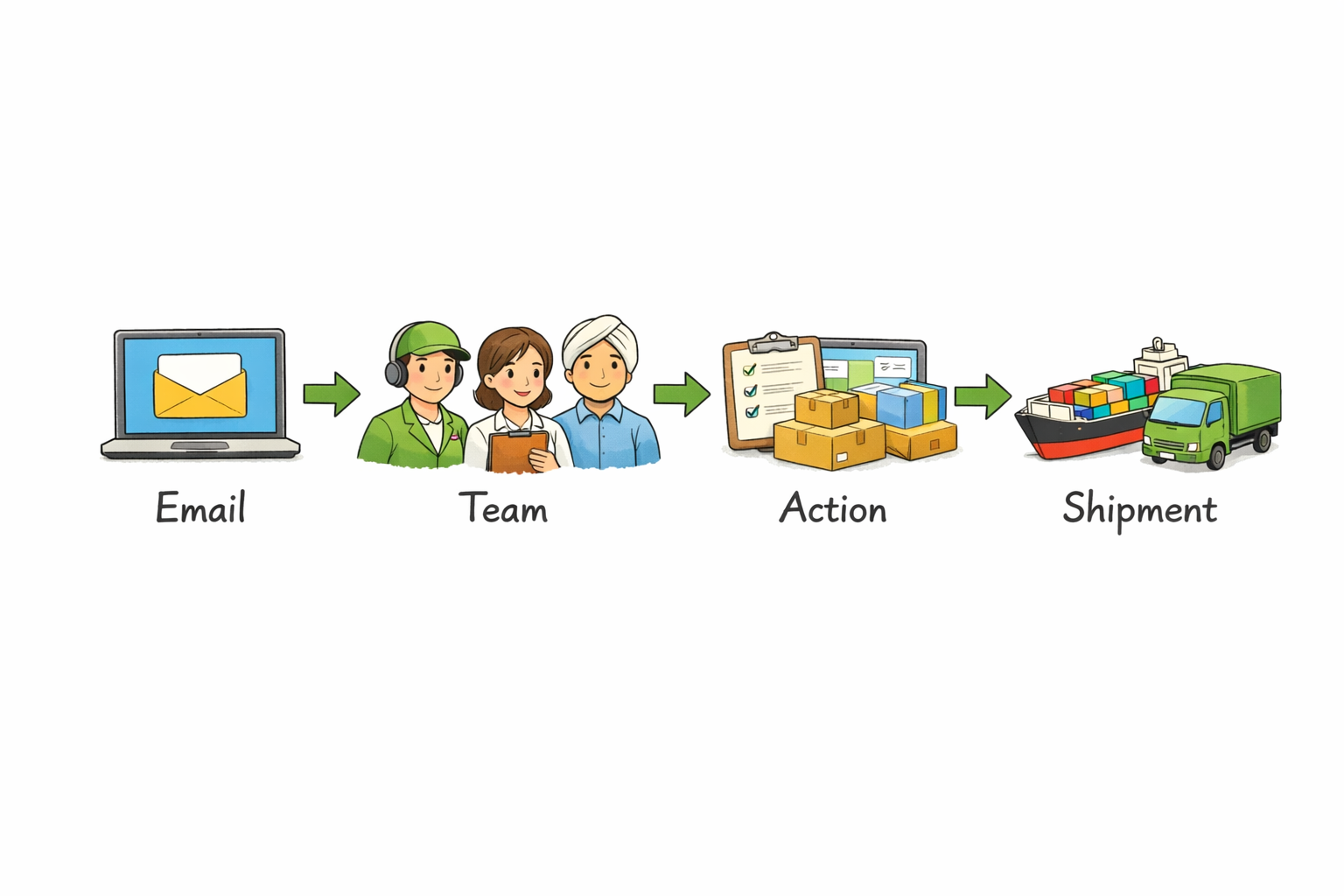
The myth of “Quick email checks”
Most operators check email dozens of times per day.
Each check feels productive.
But research across workflow-heavy industries shows something important:
Every interruption forces the brain to restart context.
In freight operations, this means:
- reopening shipment files repeatedly
- re-reading long email threads
- searching attachments again
- confirming who already responded
Multiply this across a team — and hours disappear daily.
Where time actually gets lost
The delay rarely comes from writing replies.
It comes from uncertainty.
Common situations:
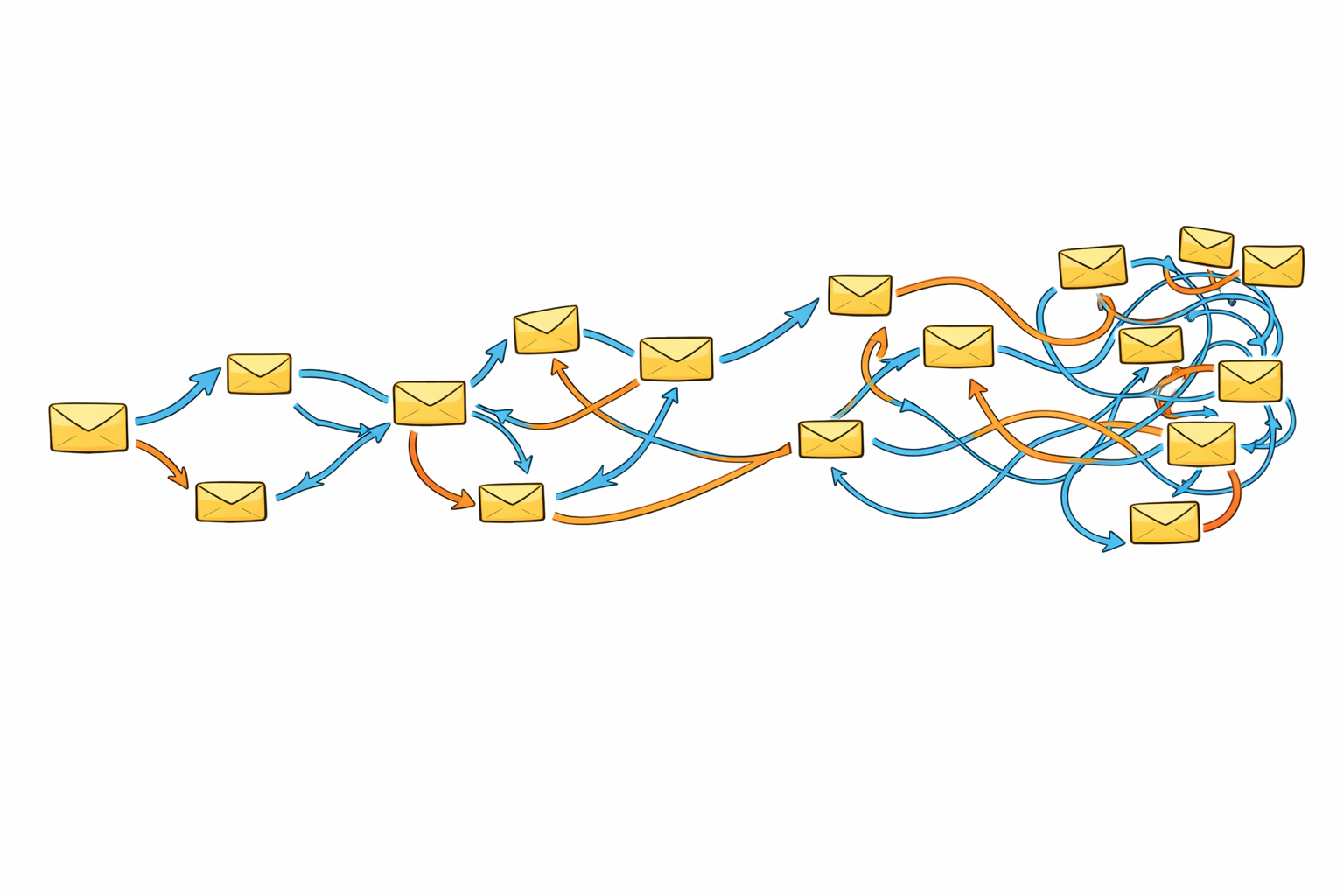
- “Did someone reply already?”
- “Who owns this shipment?”
- “I’ll respond after checking one detail.”
- “Let me forward this to accounts.”
Emails move. Ownership doesn’t.
The hidden operational costs
1. Slower customer response
Customers measure reliability through response speed, not internal effort.
2. Duplicate work
Two team members handling the same request unknowingly.
3. Missed follow-ups
Important emails disappear under newer conversations.
4. Mental fatigue
Operators feel busy all day but finish fewer meaningful tasks.
Why freight teams feel constantly busy
Freight work is reactive by nature.
But email amplifies reaction instead of enabling control.
Without structure:
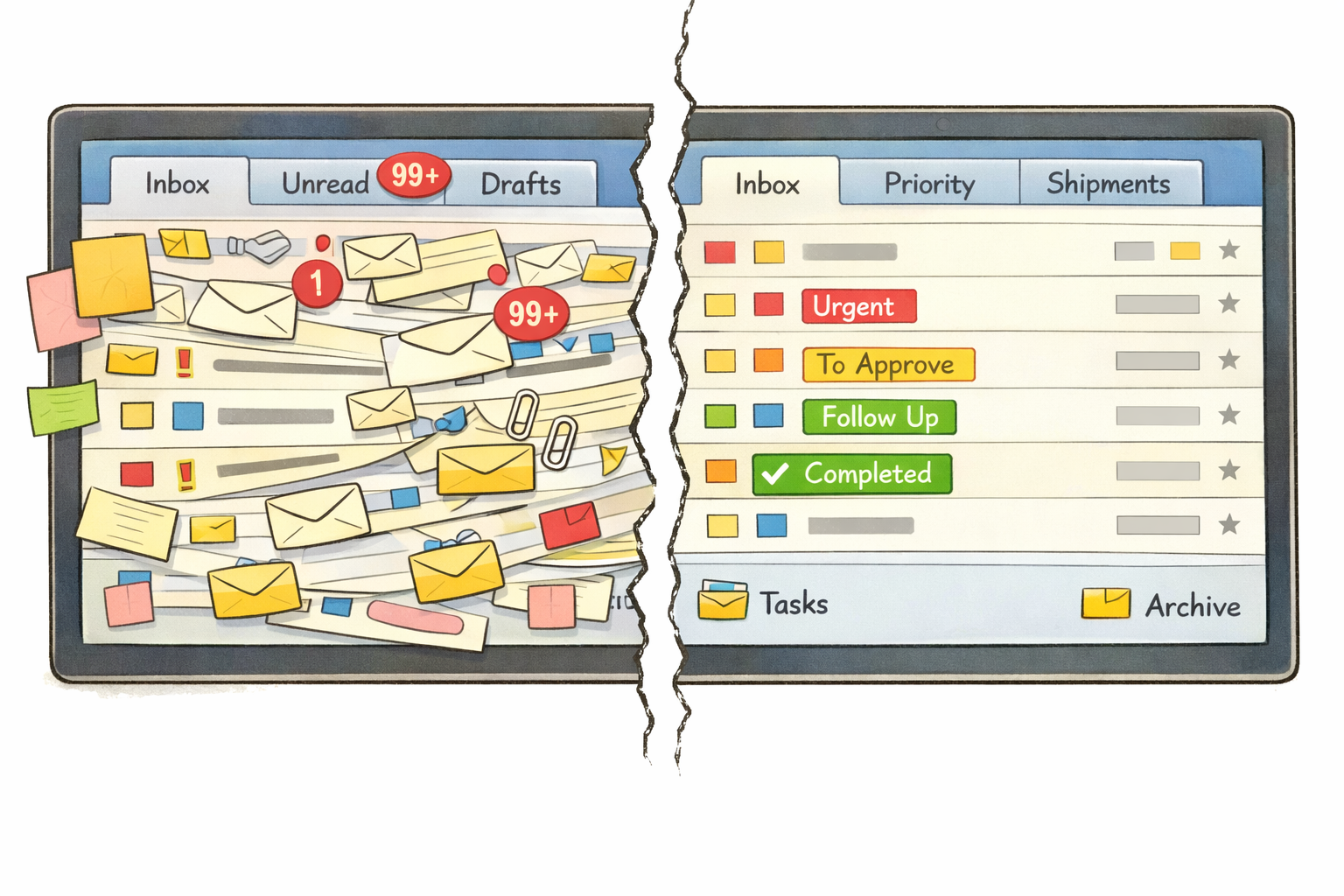
- priority emails look identical to low-value emails
- urgent shipments blend with newsletters
- reminders depend on memory
And memory fails under volume.
What efficient freight teams do differently
High-performing teams don’t reduce email volume.
They change how email behaves.
They introduce:
- clear ownership of conversations
- automatic prioritization
- reminders tied to action
- visibility across team members
Email stops being a personal task list and becomes a shared workflow.
The shift freight operations are beginning to make
Logistics companies have optimized warehouses, routing, and documentation systems.
Now communication itself is becoming operational infrastructure.
Because in freight forwarding:
Speed of reply often equals perceived service quality.
And perception drives retention.
Final thought
The biggest delays in freight rarely happen at ports or customs checkpoints.
They happen quietly — inside inboxes.
Not because teams are inefficient.
But because tools were never built for operational communication.
Once email becomes structured, teams don’t work harder.
They simply stop losing time.
