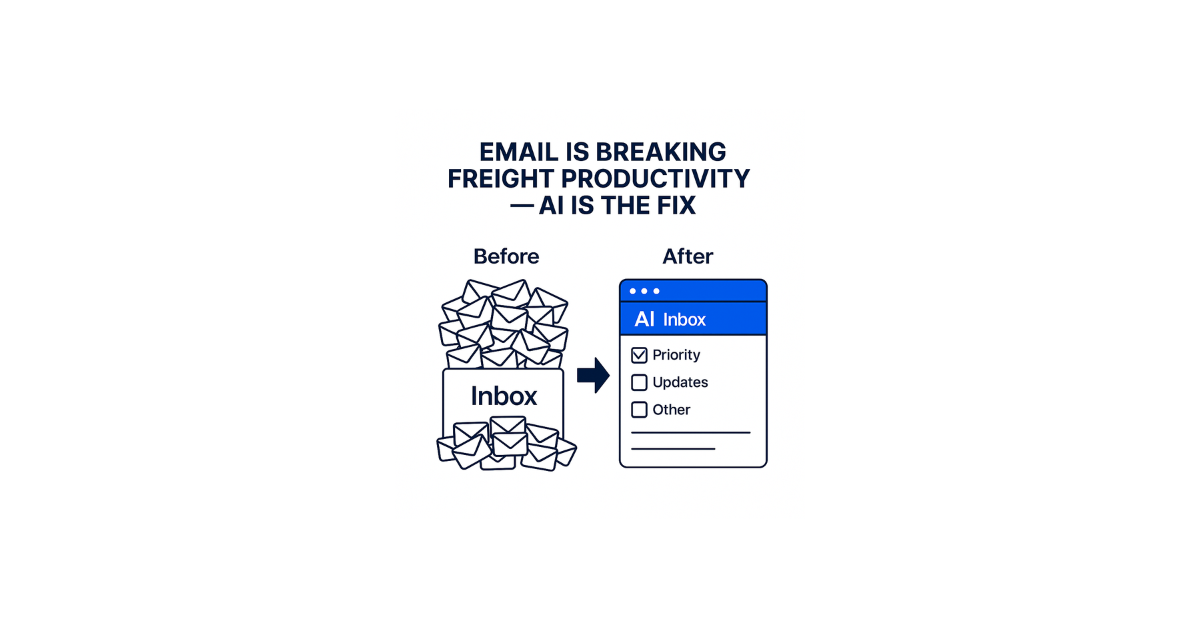


Introduction: Freight Teams Aren’t Slow — Their Email Systems Are
Freight operations move fast.
But email doesn’t.
Most freight teams lose 25–40% of daily productivity not because the work is complex, but because email is slow, unstructured, and overloaded.
Every day, teams deal with: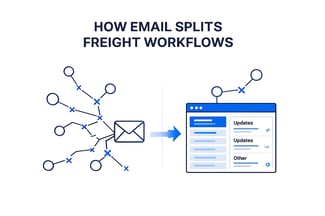
-
Missed shipment updates
-
Lost documents
-
Repeated ETA questions
-
Customer follow-ups buried in long threads
-
Rate confirmations hidden under unrelated messages
-
Internal routing errors
-
Poor visibility across team mailboxes
This isn’t an operations problem.
It’s an email problem.
And the cost is bigger than most freight companies realize.
Section 1: The Hidden Cost of Email Inefficiency
Email was never designed for logistics workflows.
Yet 80% of freight communication still lives inside it.
Here’s what that costs your team daily:
1. Lost Time to Manual Sorting
Ops teams spend hours grouping emails by customer, shipment, or urgency.
This is pure manual effort — and fully automatable.
2. Delays Caused by “Unread” and “Unseen” Emails
A single unseen email can delay:
-
Container release
-
Customs clearance
-
Delivery confirmation
-
Document submission
-
Customer communication
One missed email = hours of downstream impact.
3. Endless Repeated ETA & Status Replies
Freight customers ask the same questions repeatedly.
Answering them manually wastes time and breaks focus.
4. Searching Old Threads for Lost Documents
The average freight team spends up to 20 minutes per missing document.
Multiply that across 40 shipments per day.
You see the real cost.
5. Internal Routing Confusion
Wrong team member = hours of delay.
Section 2: Why Traditional Email Tools Fail Freight Teams
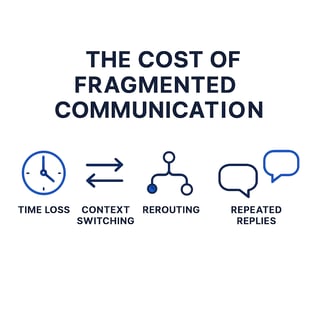
Standard email tools (Gmail, Outlook) cannot understand freight context.
They don’t know:
-
Which customer the shipment belongs to
-
Which documents are missing
-
Which updates are urgent
-
What status the shipment is in
-
Who needs to reply
Freight operations require structured workflows.
Email is structureless.
And that’s where the new AI model changes everything.
Section 3: The AI Model That Replaces Manual Inbox Work
1. AI Auto-Categorization
Emails are instantly grouped by: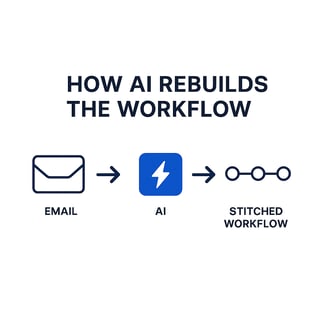
-
Customer
-
Shipment
-
Milestone
-
Urgency
-
Document requirement
2. AI Auto-Routing
Emails are assigned to the correct person based on:
-
Customer
-
Region
-
Shift
-
Department
-
Shipment type
3. AI Instant ETA & Status Replies
No typing.
No searching.
AI pulls the latest shipment data and drafts the reply automatically.
4. AI Document Detection
AI identifies:
-
POD attached or missing
-
Invoice missing
-
BL unavailable
-
KYC incomplete
5. AI Exception Alerts
If a shipment shows:
⛔ Delay
⛔ Hold
⛔ Customs block
⛔ Missing milestone
AI flags it instantly.
Section 4: The Productivity Shift
Once email becomes automated, freight teams gain:
-
3–5 hours saved per day
-
Faster customer replies
-
Zero missed emails
-
No repeated ETA work
-
Fewer exceptions
-
Higher satisfaction internally and externally
-
More time for revenue-generating tasks
Email was the bottleneck.
AI removes it completely.
Conclusion: The Inbox Shouldn’t Hold Your Operations Back
Freight operations are fast.
Email is slow.
AI closes that gap.
The teams that adopt AI-driven inboxes will deliver:
⚡ Faster operations
⚡ Lower cost per shipment
⚡ Higher customer satisfaction
⚡ Stronger operational resilience
The freight industry has innovated everywhere —
except the inbox.
Until now.
