

Introduction
In freight forwarding and CHA operations, delays rarely look dramatic.
It’s not a container stuck at port.
It’s not a flight cancellation.
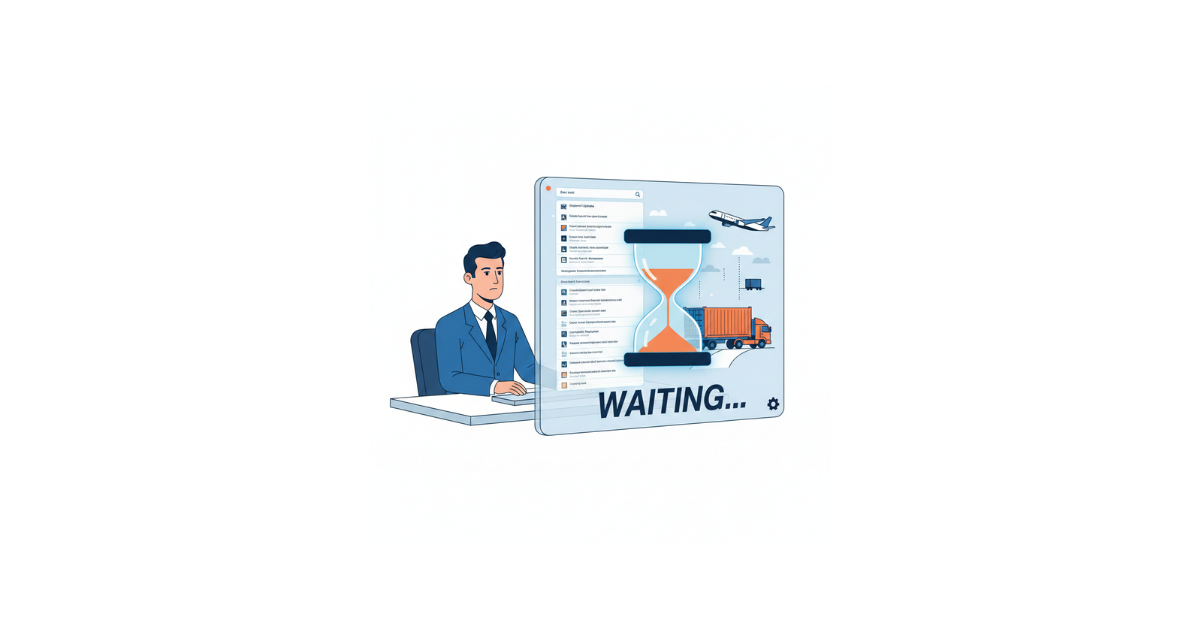
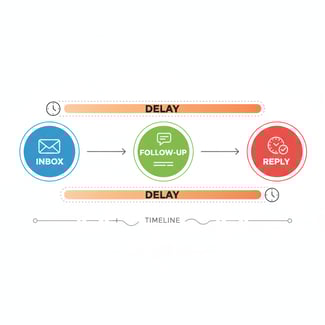
You send an email… and then you wait.
You wait for airlines to share booking acknowledgements.
You wait for customers to send documents.
You wait for shipping lines to confirm DO release.
You wait for CHA updates on clearance.
And while the inbox sits silent, your team loses momentum, focus, and hours of productivity every single week.
In this blog, we’ll break down the hidden cost of “waiting time,” why it’s worse in freight than in other industries, and how AI-powered inboxes (like SuperComp.AI) eliminate the slowdown.
1. Why “waiting for replies” is the biggest invisible bottleneck
Most freight teams measure workload by the number of shipments, emails, or tasks.
But no one measures waiting time.
A typical freight executive sends between 80–200 emails a day, and at least 30–40% of those require replies from:
-
Airlines
-
Shipping lines
-
Truckers
-
CHA teams
-
Customers
-
Overseas agents
When the reply doesn’t come:
-
Follow-ups get delayed
-
Approvals take longer
-
Files stay incomplete
-
Cargo doesn't move
This is not because teams are inefficient — it’s because the workflow depends on other people responding on time.
2. The cost of this delay (with real freight scenarios)
Scenario A: Airline booking ACK
If the airline takes 3 hours instead of 10 minutes:
-
Shipments don’t get planned
-
Trucking timelines shift
-
Customer updates get delayed
Multiply this by 30–50 shipments a day → massive slowdown.
Scenario B: Customer document delay
Waiting for: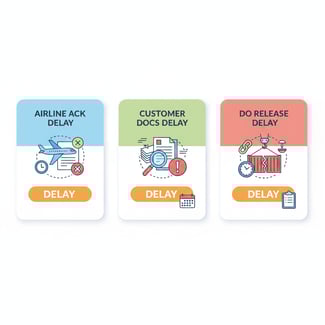
-
Commercial invoice
-
Packing list
-
KYC
-
Export declaration
Your team can’t file, can’t plan, and can’t proceed.
Scenario C: Shipping line DO release
If DO release update is delayed:
-
CHA is stuck
-
Gate-in is delayed
-
The entire shipment timeline shifts
3. Why freight teams lose more time than other industries
Other industries deal with email.
But freight deals with email plus strict dependencies and timelines.
-
Flights depart
-
Trucks need dispatch
-
Cut-offs are fixed
-
Port gates close
-
Paperwork is time-sensitive
Every delay creates a chain reaction.
4. The psychological cost: focus breaking
Freight email work requires high concentration.
When you wait:
-
You switch tasks
-
You lose the mental thread
-
You check inbox repeatedly
-
You break your flow
By the time the reply arrives, you must re-read the entire conversation to continue.
This increases cognitive load and hours spent on routine email threads.
5. How AI eliminates waiting time
This is where AI-powered inboxes like SuperComp.AI change the game.
A. Smart auto-reminders
If no response is received in expected time, the system reminds you automatically.
B. Read receipts & open tracking
Know when the recipient has opened your email — and when it’s been ignored.
C. Intelligent prioritization
Urgent emails from airlines, CHA, or customers are auto-labeled and moved up.
D. Predictive follow-up suggestions
AI detects stalled threads and prompts:
“This email needs a follow-up.”
E. Team visibility on who is waiting for what
Avoid double-follow-ups and missed updates.
6. The result
Freight teams report:
-
2–3 hours saved daily
-
Fewer errors
-
Faster shipment movement
-
Higher customer satisfaction
-
A calmer inbox
The biggest win?
No more mental stress of constantly checking for replies.
Conclusion
In freight forwarding and CHA work, speed is everything.
But most delays don’t come from work — they come from waiting.
With AI doing the tracking, nudging, reminding, sorting, and prioritizing, your team finally gets back those lost hours.
Freight moves faster.
Your team works lighter.
And your inbox stops controlling your day.
