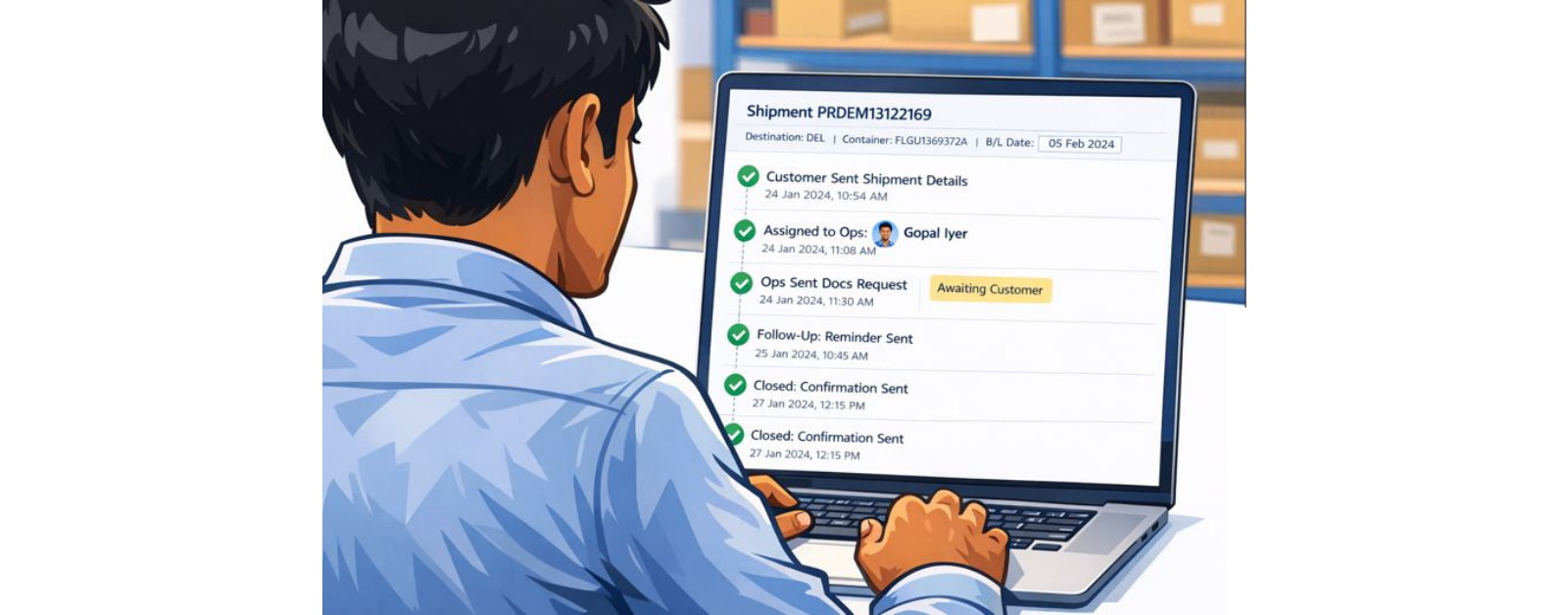


In freight forwarding and customs operations, disputes rarely begin with a major operational failure.
They begin with a simple question:
“Who handled this email?”
When a customer escalates a delay, document mismatch or missed booking, your team immediately opens the inbox and starts searching.
And that is where the real problem starts.
Not because the email is missing.
But because the decision behind the email is missing.
The hidden weakness inside freight inboxes
Most freight teams still work like this:
• one shared mailbox
• multiple people replying
• no clear ownership
• no visible follow-ups
• no structured hand-over
So when a problem occurs, nobody can clearly say:
– who received the instruction
– who accepted responsibility
– who replied
– who followed up
– and who closed the loop
The inbox only shows messages.
It does not show decisions.
Why this becomes dangerous during disputes
When a customer or partner challenges your response, the discussion always turns into:
“Did we send this?”
“Did they confirm?”
“Did someone follow up?”
Without a traceable workflow, your team can only depend on memory and message searches.
This creates three operational risks:
-
delayed internal response
-
wrong ownership during escalation
-
weak proof during commercial or service disputes
For freight forwarders and CHAs handling multiple shipments every day, this is not sustainable.
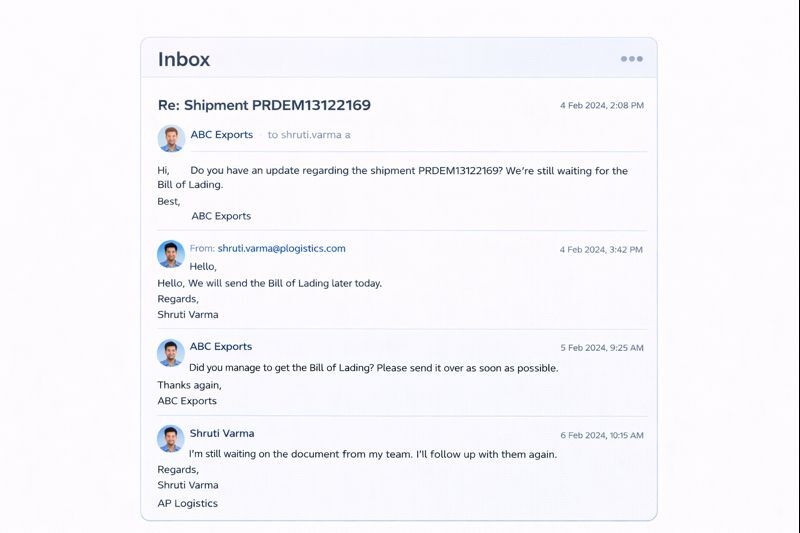
The difference between emails and operational records
Emails are communication.
Operations need records.
A proper freight communication workflow must answer one simple question for every shipment related mail:
What exactly happened after this mail arrived?
This means:
• who was assigned
• what action was taken
• what reply was sent
• what is currently pending
• and when the next follow-up is due
When this information is structured, disputes reduce naturally.
Because everyone sees the same operational reality.
Why accountability reduces mistakes more than reminders
Most logistics teams try to fix delays by adding reminders.
But reminders do not fix ownership.
When every mail clearly shows an assigned owner and current status, behavior changes automatically:
• people stop ignoring mails
• follow-ups become visible
• escalation becomes factual, not emotional
Accountability is not a management policy.
It is a system design.
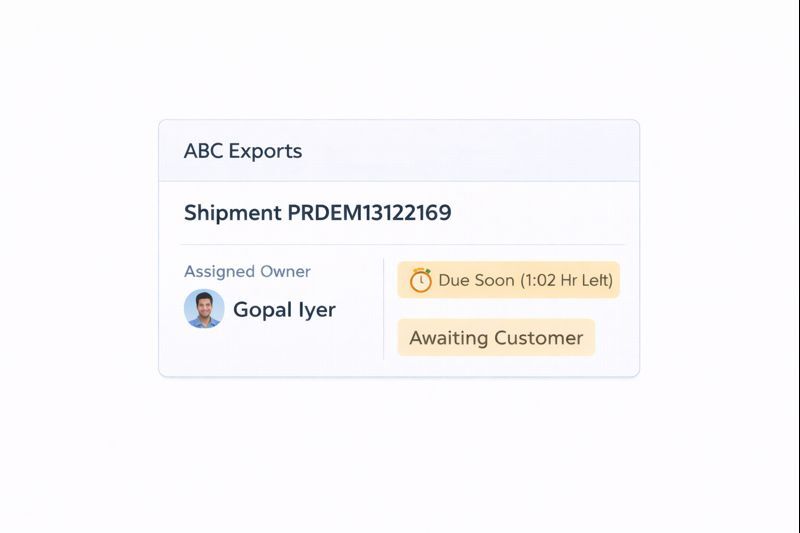
Why “audit trail” matters even for small CHA firms
Audit trail is usually associated with large enterprises.
But even small CHA and forwarding firms face:
• customer claims
• internal blame during mistakes
• compliance queries
• partner disputes
A clear communication history that shows:
➡ who handled what
➡ and when
protects both management and operations staff.
It also improves training for new team members, because past decisions become visible examples.
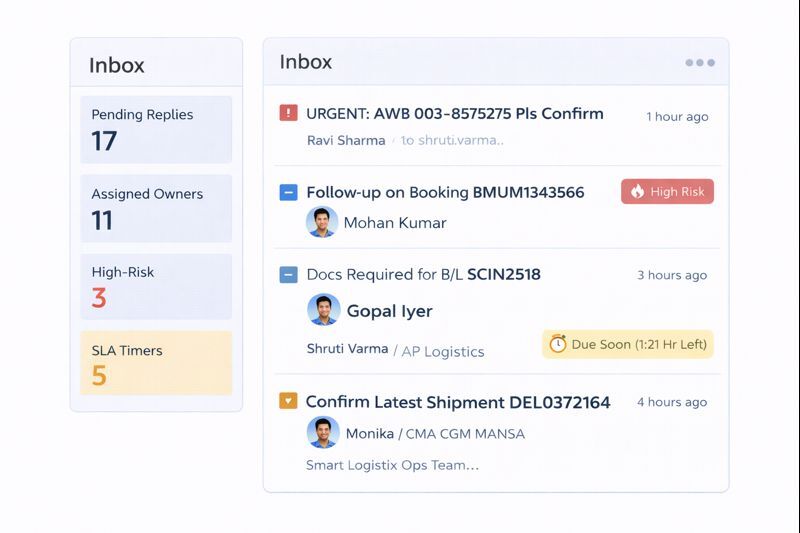
What an operational inbox should look like for freight teams
Instead of a long unread list, operations teams should see:
• pending customer replies
• high-risk emails
• assigned owners
• SLA timers
• follow-up status
The inbox becomes a control panel.
Not just a message list.
The long-term impact on your operations
When decisions become traceable inside your email workflow:
• escalations become faster
• management reviews become data driven
• customer confidence improves
• internal accountability becomes natural
Most importantly, your team stops wasting time proving what they already did.
They focus on moving shipments.
Closing
Freight forwarding is not only about moving cargo.
It is also about protecting decisions.
And today, the easiest place to lose those decisions is the inbox.
