


The silent problem nobody talks about in freight operations
Freight forwarding and customs operations rarely stop.
Teams work in shifts.
Ports operate late.
Customers expect updates across time zones.
But one of the most critical operational moments is almost never designed properly:
shift handover.
In most forwarding and CHA offices, handover still happens inside email.
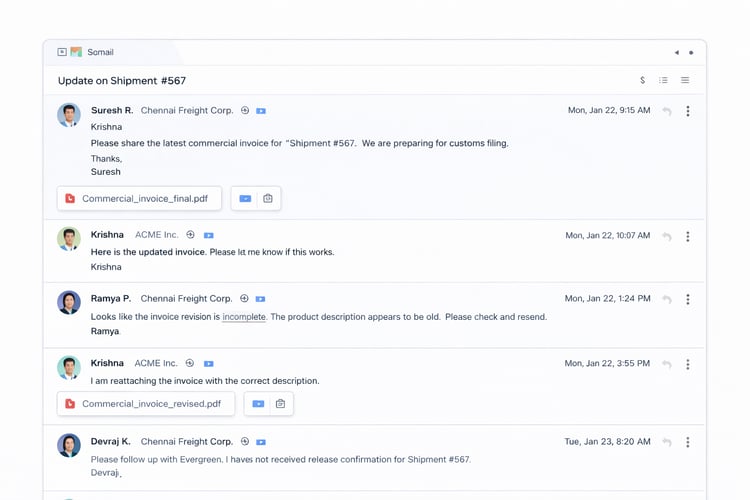
How shift handover actually happens today
A typical handover looks like this:
- the outgoing executive sends or forwards a few emails
- the next shift opens the shared inbox
- the team scrolls through multiple threads
- someone tries to understand what is “latest”
No structured summary.
No shipment status.
No clear owner.
Just emails.
Why email is dangerous for handover
Email works well for sending information.
It fails badly when teams need operational continuity.
In freight operations, continuity means:
- knowing what already happened
- knowing what is pending
- knowing what is final
- knowing who owns the next action
Email cannot represent any of these reliably.
Problem 1 – Context disappears between replies
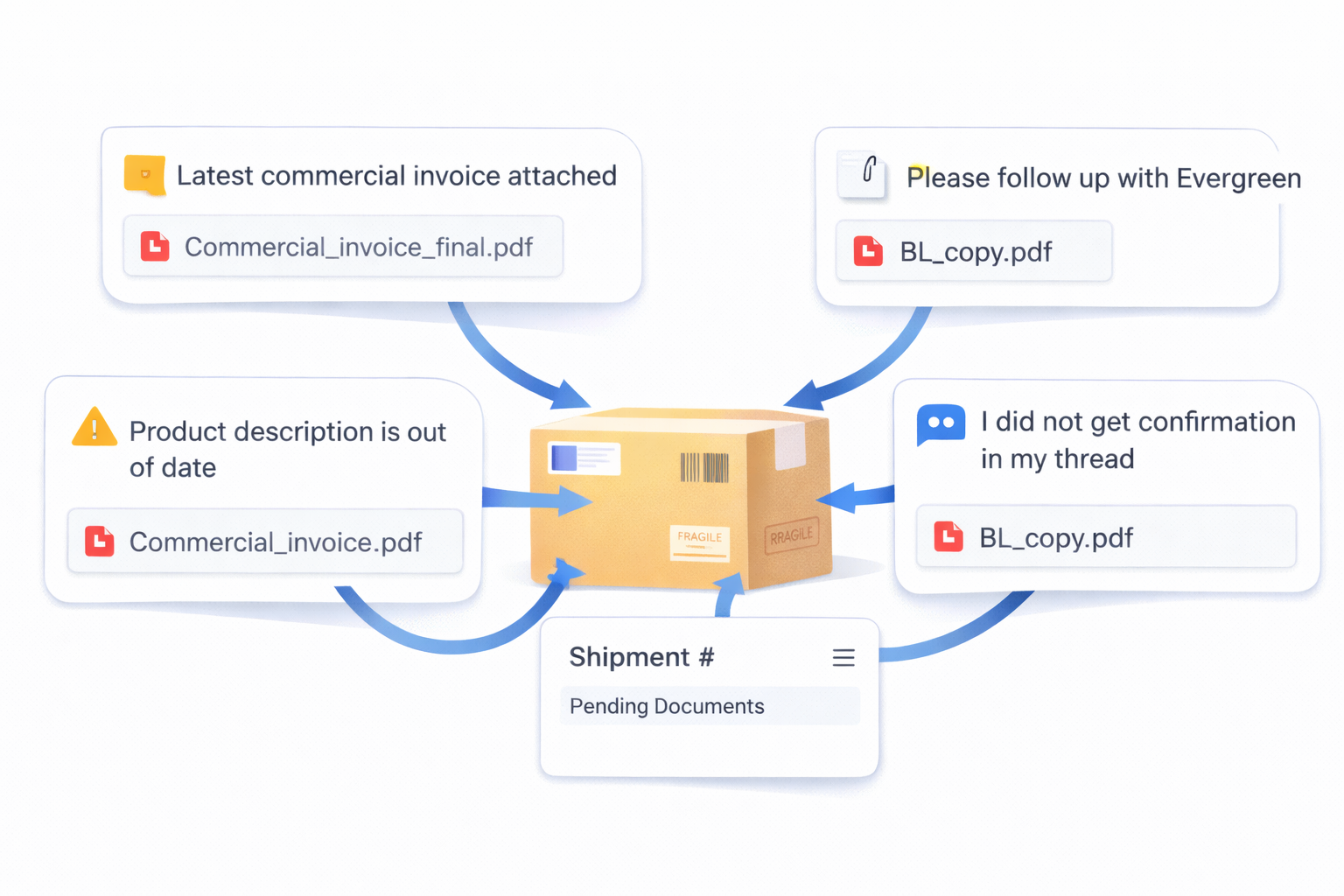
When a shipment is discussed over multiple replies and forwards, context fragments.
Important details are split across:
- attachments
- inline replies
- forwarded messages
- different subject lines
When the next shift opens the inbox, they see messages, not a shipment.
Problem 2 – No visible operational state
Email has no concept of:
- shipment stage
- document readiness
- customer confirmation
- compliance check
- follow-up status
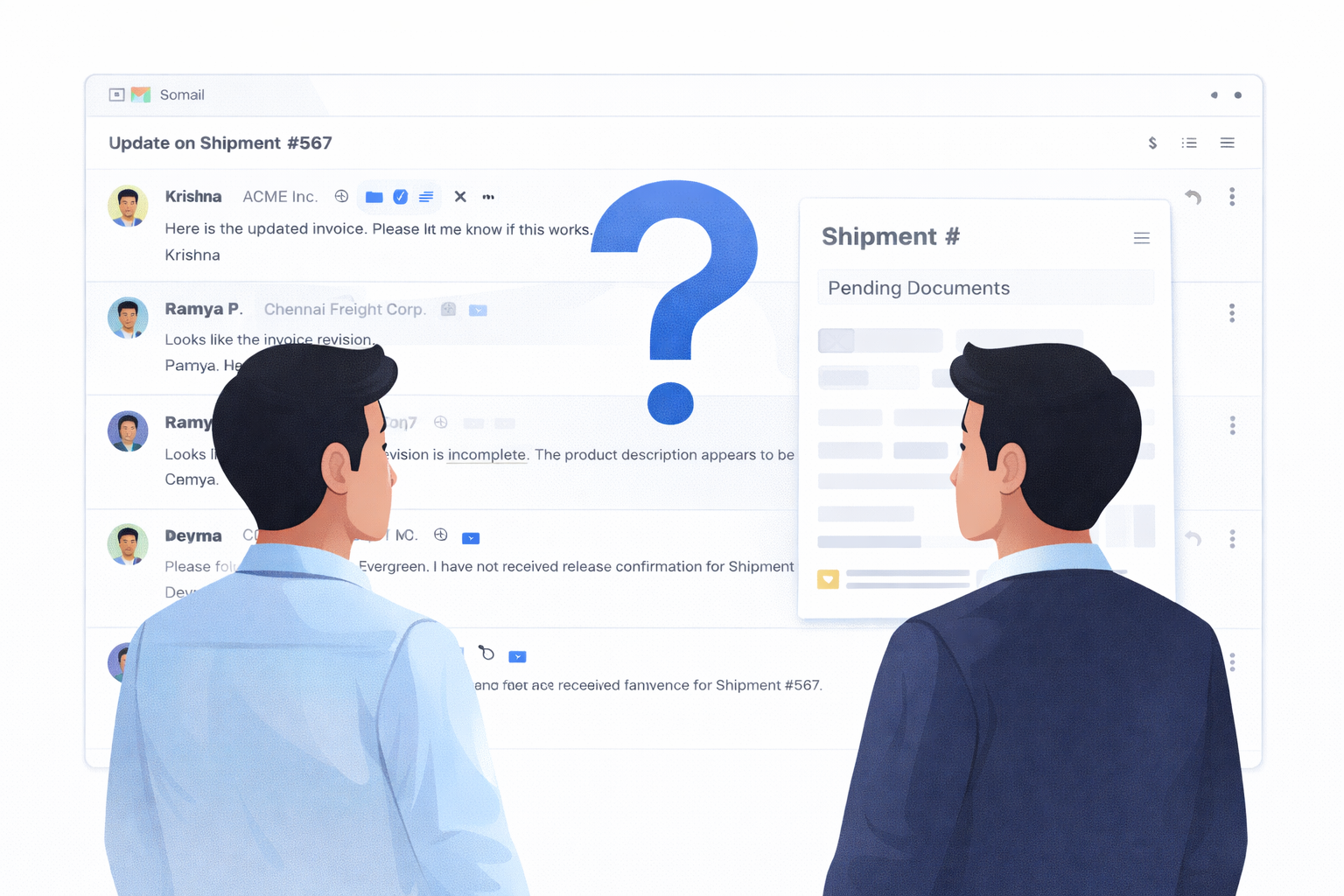
So the new executive has to reconstruct the shipment story manually.
That is slow — and risky.
Problem 3 – Responsibility silently resets
During handover, ownership becomes unclear.
Was this followed up?
Did the customer respond?
Is this waiting on the airline or on the shipper?
Email shows conversation history.
It does not show responsibility.
This is how real operational gaps are created without anyone noticing.
Problem 4 – Errors look like human mistakes
When something goes wrong, teams usually blame:
“missed mail”
“overlooked message”
“wrong attachment sent”
But the real root cause is structural.
The workflow itself lives in email.
Why this problem becomes worse as you grow
Small teams survive on informal handovers.
But as volumes increase:
- more shipments
- more customers
- more stakeholders
- more internal coordination
The inbox becomes a fragile operational backbone.
Growth amplifies the risk.
What freight teams actually need for handover
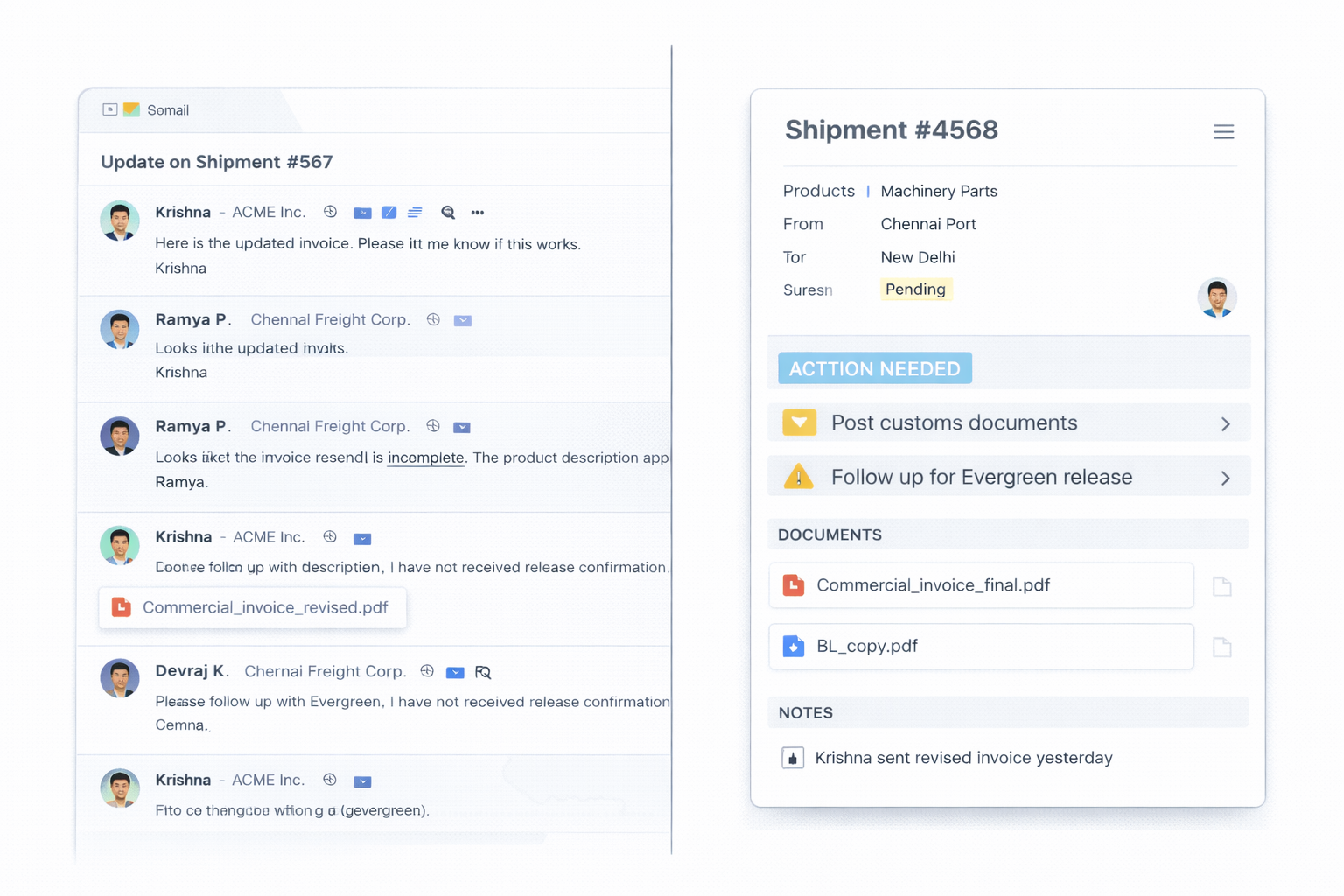
Handover should not be message-based.
It should be shipment-based.
Every shipment should carry:
- current status
- latest approved documents
- pending actions
- assigned owner
- internal notes
So that the next shift does not inherit an inbox.
They inherit a clear operational picture.
The real shift: from inbox handover to shipment handover
Forwarding and CHA teams don’t need better email rules.
They need a system where:
email becomes the input
shipment becomes the workflow
This is the only way handovers become safe, scalable and auditable.
Final thought
Most freight teams invest in:
- tracking systems
- accounting software
- customer portals
But the most fragile point in daily operations is still the moment when one person hands over to another.
If that handover is happening through email,
your operations are one long thread away from failure.
