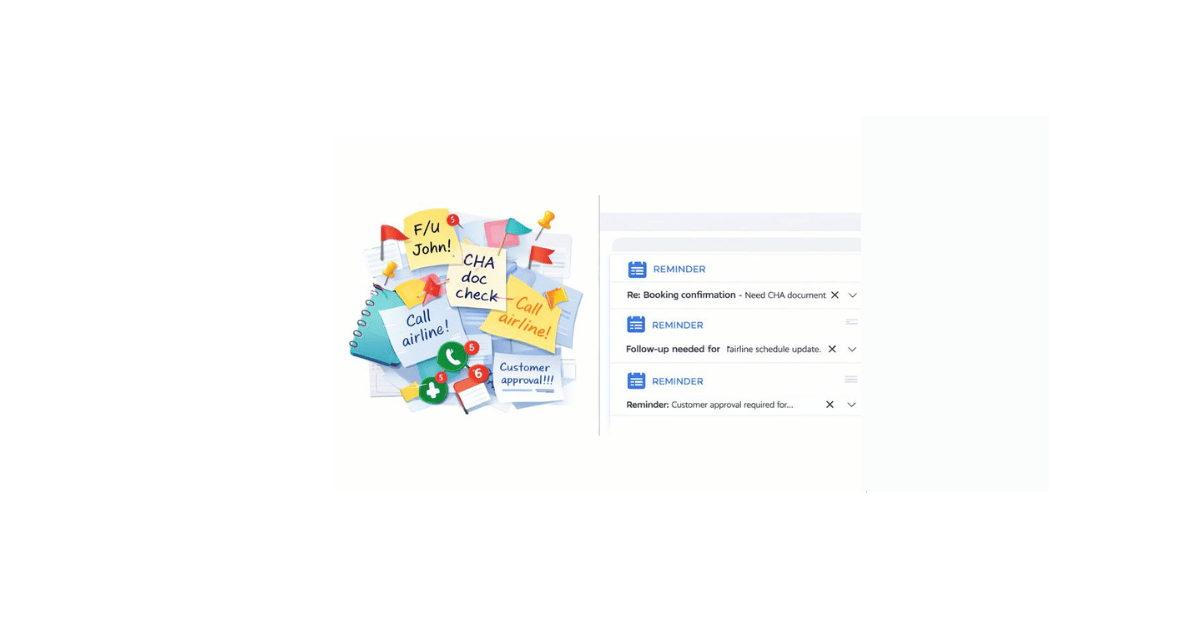


🚢 Freight delays rarely start with shipments
They start with emails.
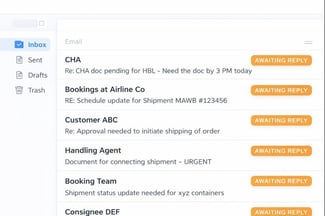
An airline confirmation that never came back.
A customer approval stuck unread.
A CHA document request that was “followed up” but never tracked.
When something goes wrong, it’s labeled a shipment delay.
But the real issue happened days earlier — inside the inbox.
📬 The hidden follow-up gap
Freight operations depend on constant communication:
-
Airlines
-
Customers
-
CHAs
-
Transporters
-
Internal teams
Each message needs a response.
Each response needs a follow-up.
But most inboxes don’t answer one critical question:
“Who is responsible for following this up?”
⚠️ Why manual follow-ups break at scale
At low volume, teams manage:
-
Flags

-
Notes
-
Memory
-
WhatsApp nudges
As volume grows:
-
Follow-ups get forgotten
-
Ownership becomes unclear
-
Delays surface too late
The inbox becomes a graveyard of “I’ll follow up later.”
🧠 Follow-ups are a system problem, not a people problem
No freight professional wants delays.
But expecting humans to:
-
Remember every pending reply
-
Track every unanswered email
-
Re-check old threads daily
…is not a scalable system.
🤖 How smart follow-ups actually work
A reliable follow-up system should: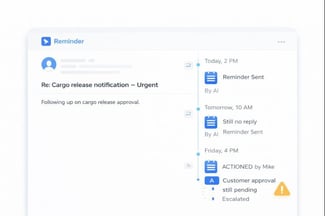
-
Detect unanswered emails automatically
-
Assign ownership
-
Trigger reminders
-
Surface risks before delays happen
This is where AI changes the game.
✨ Where SuperComp.AI fits in
SuperComp.AI doesn’t just organize emails.
It:
-
Tracks unanswered emails
-
Sends reminders automatically
-
Makes ownership visible
-
Ensures nothing critical is forgotten
So shipments move — even when inboxes are busy.
✅ Closing the follow-up gap
Freight shipments don’t fail randomly.
They fail silently — one missed follow-up at a time.
Fix the follow-up gap, and you fix:
-
Delays
-
Stress
-
Firefighting
-
Customer escalations
