


The hidden cost of shared email IDs in freight operations
Most freight companies don’t realize this, but one shared email ID can quietly cost them customers, revenue, and trust.
Not because email is bad.
But because ownership disappears when everyone logs in as the same person.
Why shared inboxes feel efficient (at first)
At 5–10 shipments a day, shared inboxes feel manageable.
Everyone sees everything.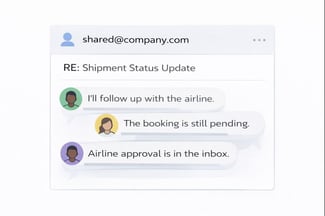
Nothing gets missed.
Until volume grows.
What breaks as volume increases
Here’s what actually happens:
-
No one knows who replied last
-
Follow-ups get delayed because “someone else might handle it”
-
Customers chase for updates
-
Management loses visibility
The inbox becomes a black hole, not a workflow.
Freight isn’t forgiving of missed emails
In freight:
-
One missed clearance mail = shipment delay
-
One late airline response = missed flight
-
One ignored customer mail = lost trust
Email isn’t communication.
It’s operations infrastructure.
The real shift: From shared inboxes to owned actions
High-performing freight teams don’t ask:
“Who checked the mail?”
They ask:
“Who owns this shipment?”
Ownership means: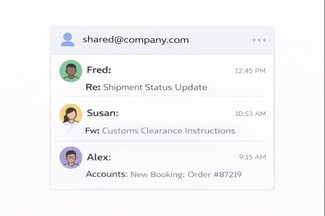
-
Each user has access
-
Every action is traceable
-
Accountability is built-in
Why this also impacts revenue
Shared inboxes often lead to:
-
Multiple desktops using one email
-
No way to track usage
-
No way to scale teams cleanly
Clear ownership isn’t just operational hygiene —
it’s how modern freight SaaS scales sustainably.
What modern freight email systems do differently
They:
-
Separate access by user
-
Track actions by person
-
Maintain one company view without shared chaos
This is how inboxes scale with volume, not against it.
Final thought
If your inbox feels overwhelming,
the problem isn’t email.
It’s ownership.
