

Every freight team believes the same thing:
“If it’s important, someone will see it.”
Unfortunately, that belief is exactly why shipments get delayed, customers get frustrated, and teams stay stuck in firefighting mode.
The real danger in freight operations isn’t ignored emails.
It’s unseen emails.
Welcome to the problem of Inbox Blind Spots.
What is an inbox blind spot?
An inbox blind spot is any email that:
-
Arrives but isn’t noticed
-
Is seen but not owned
-
Is read but never acted upon
-
Is assumed “someone else will handle”
These emails don’t trigger alerts.
They don’t feel urgent.
They don’t look dangerous — until it’s too late.
Where do blind spots commonly happen?
1. CC Overload
Rate approvals, booking confirmations, and airline updates buried in CC chains where no one feels responsible.
2. Reply-to-Old-Thread Emails
Airlines and customers reply to weeks-old threads — your inbox treats it like “old news.”
3. Multi-Team Handling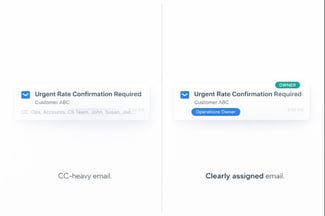
Sales thinks ops saw it.
Ops thinks accounts handled it.
Accounts never opened it.
4. Time-Zone Gaps
Emails land after business hours and get buried under the next day’s volume.
Why freight teams don’t notice the damage immediately
Blind spots don’t explode instantly.
They show up later as:
-
“Why didn’t we inform the customer earlier?”
-
“Who was tracking this shipment?”
-
“When did the airline send this update?”
-
“Why are we apologizing again?”
By the time the email is discovered, the cost is already paid — in money, credibility, or both.
The real issue isn’t volume — it’s visibility
Most inboxes answer only one question:
“Is this email read or unread?”
Freight operations need answers to better questions:
-
Is this shipment waiting on a reply?
-
Who owns this email?
-
How long has it been idle?
-
What emails are risky right now?
Traditional email tools don’t answer these.
That’s why blind spots persist even in “organized” inboxes.
How high-performing freight teams eliminate blind spots
They stop treating email as communication — and start treating it as workflow.
That means:
-
Clear ownership for every operational email
-
Visibility into what’s waiting, stuck, or aging
-
Automatic reminders for silent threads
-
Context preserved across teams
When inboxes gain visibility, blind spots disappear.
Final thought
If your team only reacts to emails they see, you’re already at risk.
Because the most expensive freight problems don’t come from ignored emails —
they come from emails no one knew they missed.
